

Features of Quick Assist
One-Click Remote Support
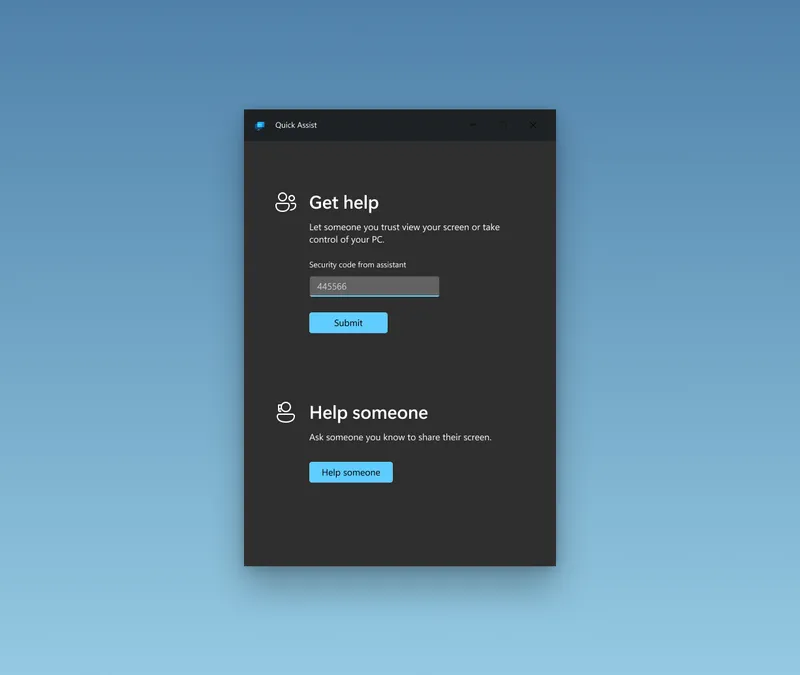
Quick Assist generates a temporary six-digit code that the person needing help simply enters to initiate a remote session, with no router configuration, port forwarding, or third-party account setup required on either side. The connection is brokered through Microsoft's servers, and the full remote desktop appears within seconds of the code being entered and confirmed. Sessions are encrypted and time-limited, so no persistent access is granted — the connection closes the moment either party disconnects.
Screen Sharing & Live Annotation
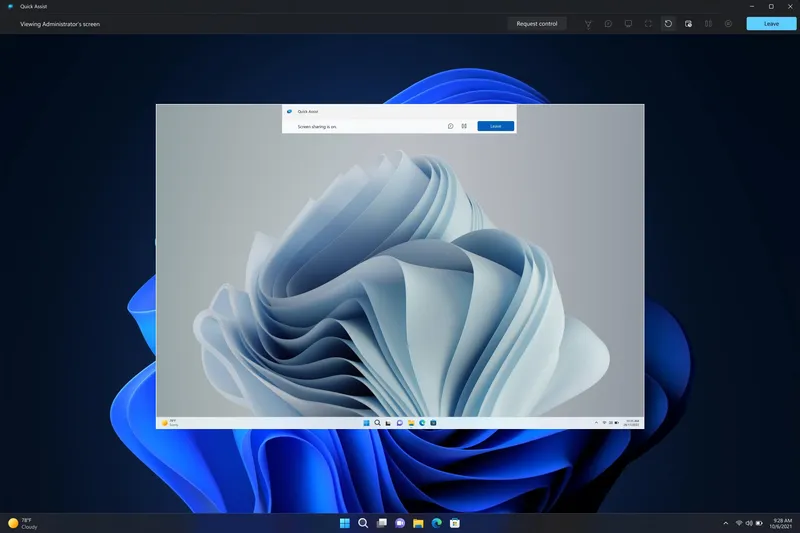
Beyond full remote control, Quick Assist supports a view-only screen sharing mode useful for training scenarios where you want to observe what a user is doing without taking over their machine. Both parties can annotate the screen with a drawing tool to highlight specific buttons, menus, or error messages during the session. An in-session chat panel provides a parallel text communication channel that doesn't require a separate phone call running alongside.
Native Windows Integration
As a first-party Microsoft application, Quick Assist respects existing group policy configurations and works within corporate proxy settings without additional setup. It appears in the Windows Start menu and updates through the Microsoft Store alongside other system components, keeping it current without a separate update agent. For organizations standardized on Microsoft infrastructure, the absence of additional licensing costs or external vendor relationships is a meaningful operational advantage.
Pros & Cons
- No extra software needed
- Secure encrypted connection
- Easy code-based setup
- Windows-only platform
- Requires internet connection
- Limited to one session at a time
Top Downloads for Windows


