
Features of TeamViewer Remote
Reliable Cross-Platform Remote Access
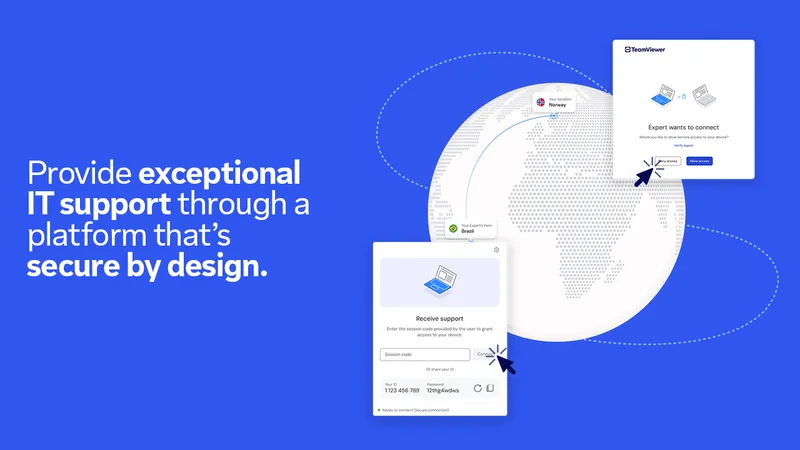
TeamViewer connects to any remote computer without router configuration, open ports, or VPN tunnels, routing the connection through its global relay infrastructure to navigate NAT restrictions automatically. The remote desktop renders at the target machine's resolution, with image quality adjusting dynamically based on available bandwidth to maintain responsiveness on slower connections. Windows, macOS, Linux, iOS, and Android are all supported on both ends, removing any operating system constraint from the remote access equation.
File Transfer & Session Tools
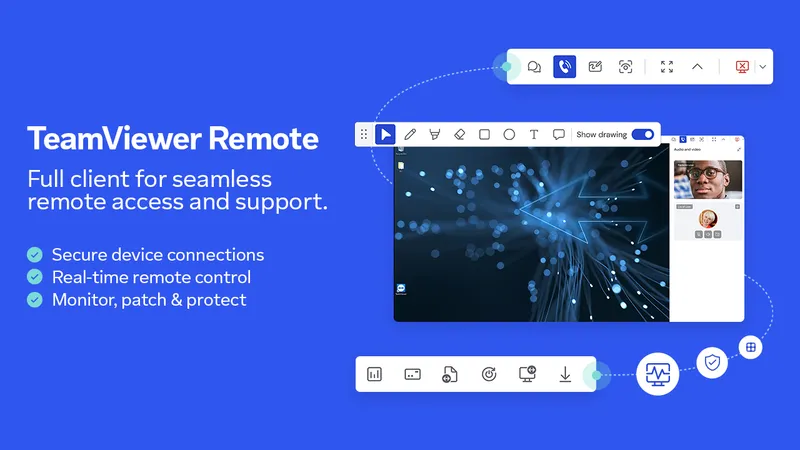
A split-pane file manager lets you move files between local and remote machines with drag-and-drop interactions that feel no different from a local file operation, with transfers continuing in the background without interrupting the remote desktop view. Session recording captures the entire session as a video saved to the controlling machine, useful for auditing, training, or documentation purposes. The integrated chat panel provides a text communication channel that persists for the session duration, helpful when a voice call is impractical.
Enterprise Management & Audit Trail
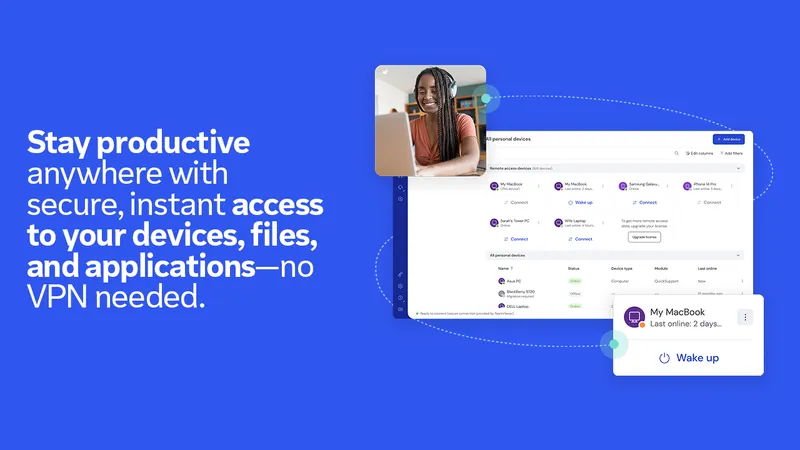
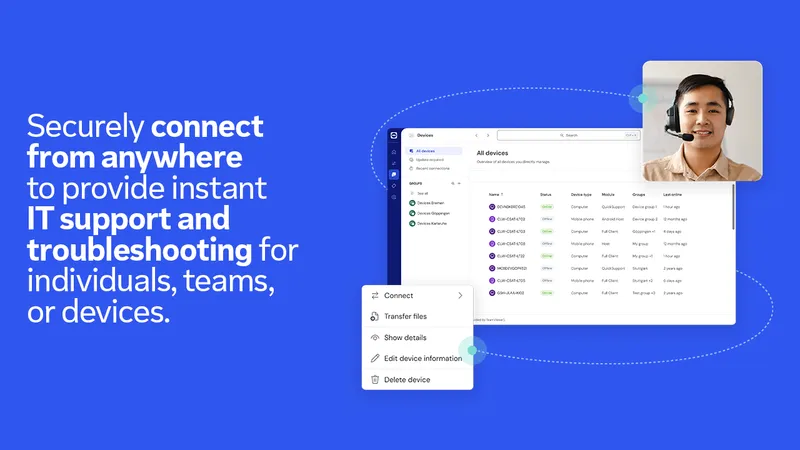
A centralized management console organizes all enrolled devices with status indicators, group structure, and one-click connection initiation, removing the need to exchange session codes for recurring support tasks. Every connection is logged with timestamp, duration, and initiating account, creating an audit trail that satisfies IT security requirements. Two-factor authentication and device-level access passwords provide layered credential protection for organizations with strict access control requirements.
Pros & Cons
- Broad cross-platform support
- Reliable connection quality
- No port forwarding needed
- Subscription required for business
- High resource usage
- Free version has session limits

Top Downloads for Windows